Year 3 maths booklets in PDF format are becoming increasingly popular resources. They offer focused practice, mirroring curriculum goals, and are easily accessible for students and educators alike.
What is a Year 3 Maths Booklet?
A Year 3 maths booklet is a collection of worksheets and activities specifically designed to reinforce mathematical concepts for children aged 8-9, typically in their third year of primary school. These booklets often cover core topics like number, addition, subtraction, multiplication, division, and fractions.
Presented in a PDF format, they provide a structured learning experience, allowing students to build confidence and master essential skills. They serve as excellent supplementary material to classroom learning, offering extra practice and support.
Why Use a PDF Format?
PDFs offer several advantages for Year 3 maths booklets. They ensure consistent formatting across all devices – computers, tablets, and smartphones – maintaining visual clarity. PDFs are easily downloadable and printable, allowing for offline access and physical practice.
Furthermore, they are widely compatible, requiring no special software to open. This accessibility makes them ideal for sharing with students, parents, and educators, promoting convenient and effective learning both inside and outside the classroom.
Core Maths Topics Covered in Year 3
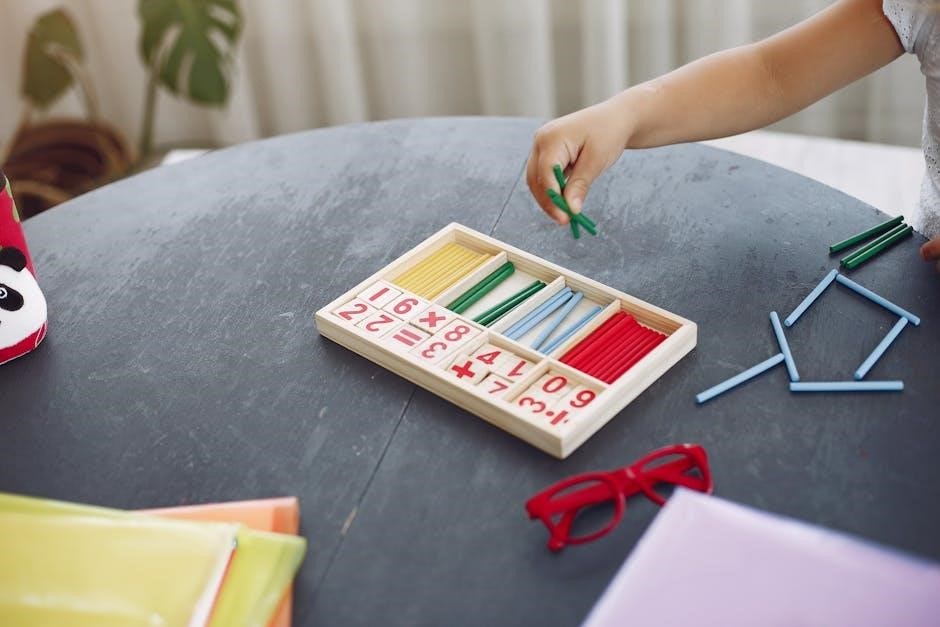
Year 3 maths booklets typically focus on key areas: number, addition/subtraction, multiplication/division, and fractions. These build a strong foundation for future learning.
Number and Place Value
Year 3 maths booklets dedicate significant attention to number and place value. Students practice recognizing the value of digits in three-digit numbers, comparing and ordering numbers up to 1000, and understanding concepts like hundreds, tens, and ones.
Booklets often include exercises on partitioning numbers, finding 10 or 100 more or less, and representing numbers using various models like base ten blocks. Mastery of these skills is crucial, forming the bedrock for all other mathematical operations.
Addition and Subtraction
Year 3 maths booklets heavily feature addition and subtraction, building upon prior knowledge. Worksheets focus on adding and subtracting numbers with up to three digits, including column addition and subtraction with regrouping (carrying and borrowing).
These booklets often present problems in various formats – word problems, number sentences, and visual representations. Students practice checking their work using inverse operations and applying these skills to solve real-life mathematical challenges, reinforcing fluency and accuracy.
Multiplication and Division
Year 3 maths booklets introduce multiplication and division as inverse operations. Pupils learn their 2, 3, 4, 5, 6, 8, 9 and 10 times tables, often through repeated addition and visual arrays. Division is explored through sharing and grouping, relating it back to multiplication facts.
Booklets provide practice with solving multiplication and division problems within a specific times table range, building confidence and automaticity. Word problems are included to demonstrate practical applications of these essential mathematical concepts.
Fractions
Year 3 maths booklets begin the journey into understanding fractions. Children learn to recognise, find, and name a fraction of a whole, and a fraction of a set of objects. They focus on unit fractions (1/2, 1/3, 1/4) and non-unit fractions (2/3, 3/4), visually representing them with diagrams.
Booklets offer exercises in identifying equivalent fractions and comparing simple fractions, laying the groundwork for more complex fraction work later on. Practical examples help solidify understanding of this foundational mathematical concept.

Specific Skills Developed with Booklets
Year 3 maths booklets (PDF) cultivate crucial skills like mental calculation, efficient problem-solving, and the ability to apply mathematical concepts to everyday situations.
Mental Maths Strategies
Year 3 maths booklets (PDF) actively promote the development of essential mental maths strategies. These booklets often include exercises designed to encourage children to calculate quickly and accurately without relying solely on written methods.
Techniques like counting on or back, using number bonds, and recognizing patterns are frequently reinforced. Consistent practice within these booklets builds fluency and confidence in performing calculations mentally, a foundational skill for future mathematical success. This approach fosters a deeper understanding of number relationships.
Problem Solving Skills
Year 3 maths booklets (PDF) are invaluable tools for honing problem-solving abilities. They present mathematical concepts within real-world contexts, challenging students to apply their knowledge in diverse scenarios.
These booklets typically feature word problems requiring children to identify relevant information, choose appropriate operations, and justify their solutions. This process cultivates critical thinking, logical reasoning, and a deeper comprehension of mathematical principles beyond rote memorization, preparing them for complex challenges.
Applying Maths to Real-Life Scenarios
Year 3 maths booklets (PDF) excel at bridging the gap between abstract concepts and everyday life. They frequently incorporate problems mirroring situations children encounter daily – calculating costs at a shop, measuring ingredients for baking, or determining time elapsed during activities.
This practical application fosters a sense of relevance, demonstrating that maths isn’t merely an academic exercise. It empowers students to see maths as a useful tool for navigating the world around them, boosting engagement and understanding.

Finding and Accessing Year 3 Maths Booklets (PDF)
Year 3 maths booklets (PDF) are readily available through online educational platforms, school websites offering resources, and numerous sites providing free printable options.
Online Educational Platforms
Numerous online educational platforms host a wide variety of Year 3 maths booklets in PDF format. These platforms often offer interactive features alongside downloadable resources, enhancing the learning experience. Websites like Twinkl, BBC Bitesize, and Education.com provide curated collections aligned with the national curriculum.
Many platforms offer both free and premium content, with paid subscriptions unlocking access to more extensive booklet libraries and additional learning tools; These resources frequently include answer keys and progress tracking features, supporting both students and parents. Exploring these platforms provides convenient access to quality Year 3 maths practice.
School Websites and Resources
Many schools directly provide Year 3 maths booklets as PDFs on their websites, often within the ‘resources’ or ‘homework’ sections. These booklets are specifically tailored to the school’s teaching approach and curriculum coverage, ensuring alignment with classroom learning. Teachers frequently create or curate these materials to reinforce concepts taught in lessons.
Additionally, some schools utilize online learning management systems (LMS) where PDFs are distributed and assignments are submitted. Checking your child’s school website or contacting their teacher is a valuable first step in accessing relevant Year 3 maths practice materials.
Free Printable Options
Numerous websites offer free, printable Year 3 maths booklets in PDF format. These resources can be a cost-effective way to supplement learning, providing extra practice opportunities. Websites dedicated to educational resources often host a variety of downloadable booklets covering core maths topics.
However, it’s crucial to evaluate the quality and alignment with the national curriculum before use. Searching online for “Year 3 maths worksheets PDF” or “free maths booklets Year 3” will yield many options for exploration.
Evaluating the Quality of a Booklet
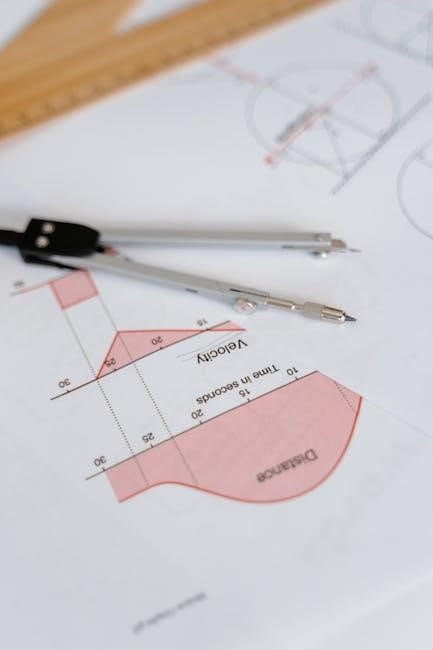
Assessing a Year 3 maths booklet’s quality involves checking curriculum alignment, the presence of clear answer keys, and ensuring the content is appropriately challenging for young learners.
Alignment with National Curriculum
Crucially, a high-quality Year 3 maths booklet must demonstrably align with the national curriculum standards. This ensures students are practicing the specific concepts and skills they are expected to master at this stage. Look for booklets that explicitly reference curriculum objectives or learning outcomes.
A strong alignment guarantees the booklet reinforces classroom learning and prepares students effectively for assessments. Content should cover key areas like number, addition, subtraction, multiplication, division, and fractions, mirroring the curriculum’s scope and sequence. Discrepancies suggest the booklet may be unsuitable or supplementary at best.
Answer Keys and Explanations
Comprehensive answer keys are non-negotiable for any effective Year 3 maths booklet. However, simply providing answers isn’t enough; detailed explanations are vital. These explanations should clearly demonstrate the method used to arrive at the correct solution, fostering deeper understanding.
Booklets with worked examples empower students to learn from their mistakes and build confidence. Parents and educators also benefit, enabling them to provide targeted support. Absence of explanations diminishes the booklet’s educational value, turning it into a mere exercise in rote memorization.
Age-Appropriateness of Content
Year 3 maths booklets must align with the developmental stage of 8-9 year olds. Content should be presented using clear, concise language, avoiding overly complex terminology. Visual aids, like diagrams and illustrations, are crucial for reinforcing concepts and maintaining engagement.
Problems should be relatable to a child’s everyday experiences, fostering a sense of relevance. Booklets should gradually increase in difficulty, building upon previously learned skills. Content that is too advanced or abstract can lead to frustration and disengagement.
Utilizing the Booklet Effectively
Effective use of Year 3 maths booklets requires a structured approach, consistent practice, and supportive guidance from parents or educators to maximize learning outcomes.
Creating a Study Schedule
Developing a consistent study schedule is crucial when using Year 3 maths booklets. Allocate specific times each week dedicated solely to maths practice, preventing overwhelm. Break down the booklet into manageable sections, setting realistic goals for each session.
Incorporate short breaks to maintain focus and prevent burnout. Vary the types of questions tackled – mixing calculation-based problems with word problems – to reinforce understanding. Regularly review completed sections to solidify concepts and identify areas needing further attention. A well-planned schedule fosters confidence and progress.
Parental Involvement and Support
Active parental involvement significantly enhances a child’s success with Year 3 maths booklets. Offer encouragement and a quiet study space, minimizing distractions. Review completed work, not to correct for them, but to discuss problem-solving strategies and identify areas of confusion.
Celebrate effort and progress, fostering a positive attitude towards maths. Help connect maths concepts to real-life scenarios, making learning more relatable. Regular communication with the teacher provides valuable insights and ensures consistent support.
Tracking Progress and Identifying Weaknesses
Consistent monitoring of progress is crucial when using Year 3 maths booklets. Regularly review completed sections, noting areas where the child excels and struggles. Utilize any included assessment tools or create simple tracking charts to visualize improvement over time.
Identifying weaknesses allows for targeted support. Focus extra practice on challenging concepts, perhaps using supplementary resources. Don’t hesitate to seek clarification from the teacher regarding persistent difficulties, ensuring a solid foundation is built.

Types of Questions Included
Year 3 maths booklets typically feature diverse question types: multiple choice, engaging word problems demanding application, and calculation-based exercises to reinforce core skills.
Multiple Choice Questions
Multiple choice questions within Year 3 maths booklets serve as a quick assessment tool, evaluating foundational understanding of concepts. These questions present a problem alongside several potential answers, requiring students to identify the correct solution. They are excellent for building confidence and reinforcing learned material.
Often, these questions focus on key areas like number recognition, basic operations, or shape identification. The format allows for efficient practice and provides immediate feedback, helping students pinpoint areas needing further attention. They are a staple in many educational resources.
Word Problems
Word problems are a crucial component of Year 3 maths booklets, fostering critical thinking and application of mathematical skills. These questions present real-life scenarios, requiring students to interpret information and determine the appropriate operation to solve the problem. They bridge the gap between abstract concepts and practical understanding.
Effective word problems encourage students to identify key details, choose relevant data, and articulate their reasoning. They develop problem-solving strategies and enhance their ability to apply maths in everyday contexts, building a deeper comprehension of the subject.
Calculation-Based Questions
Calculation-based questions within Year 3 maths booklets provide focused practice on core arithmetic skills. These questions typically involve direct application of addition, subtraction, multiplication, and division, reinforcing procedural fluency. They are designed to build speed and accuracy in fundamental mathematical operations.
These exercises often start with simpler calculations and gradually increase in complexity, allowing students to build confidence and mastery. Regular practice with these questions is essential for solidifying foundational skills and preparing for more advanced mathematical concepts.

Benefits of Regular Practice
Consistent practice with Year 3 maths booklets boosts speed, accuracy, and confidence. It also establishes a strong foundation for tackling Year 4’s challenges.
Improved Speed and Accuracy
Regular engagement with Year 3 maths booklets (PDF) significantly enhances a child’s computational fluency. Repeated exposure to varied problems builds muscle memory, allowing for quicker recall of facts and procedures. This focused practice minimizes careless errors, fostering greater accuracy in calculations.
As students work through the booklets, they internalize strategies, reducing reliance on finger-counting or lengthy processes. This translates to improved performance not only within the booklet itself, but also during classroom assessments and real-world applications of mathematical concepts.
Increased Confidence
Consistent use of Year 3 maths booklets (PDF) cultivates a stronger sense of mathematical confidence in young learners. Successfully completing problems, even challenging ones, provides a tangible sense of accomplishment. This positive reinforcement motivates students to tackle more complex tasks with a ‘can-do’ attitude.
As skills improve, anxiety surrounding maths diminishes. Children become more willing to participate in class, ask questions, and attempt problems independently. This newfound confidence extends beyond the classroom, empowering them to approach mathematical challenges in everyday life with greater assurance.
Preparation for Year 4
Year 3 maths booklets (PDF) serve as excellent preparation for the more demanding curriculum of Year 4. They reinforce foundational concepts – number, addition, subtraction, fractions – ensuring a solid base for future learning. Mastering these skills now prevents gaps in understanding later on.
Booklets often introduce concepts that will be expanded upon in Year 4, providing a valuable head start. This proactive approach reduces anxiety and allows students to approach new topics with familiarity and confidence, setting them up for continued success in mathematics.

Cost Considerations for Booklets
Year 3 maths booklets (PDF) range from free printable options to paid resources. Budgeting depends on desired features, quantity, and supplemental materials needed for effective learning.
Free vs. Paid Resources
Free Year 3 maths booklets (PDF) offer an accessible starting point, often providing basic practice aligned with core topics. However, these may lack detailed answer keys, varied question types, or comprehensive coverage. Paid resources generally present higher quality content, including thorough explanations, diverse problem-solving scenarios, and robust assessment tools.
Investing in paid booklets can save time and ensure curriculum alignment. Consider your child’s learning style and needs when deciding. Free options are excellent supplements, while paid versions often provide a more structured and complete learning experience.
Budgeting for Additional Materials
Year 3 maths booklet (PDF) costs vary, but budgeting for supplementary materials is crucial. Consider expenses beyond the booklet itself – printing costs if using digital versions, pencils, erasers, and potentially a dedicated notebook. Interactive tools like online games or videos can enhance learning, adding to the overall budget.
Allocate funds for potential tutoring or extra practice if your child struggles with specific concepts. A small investment in quality resources can significantly improve understanding and build confidence, ultimately supporting their mathematical journey.
Digital Tools to Supplement Booklets
Enhance Year 3 maths booklet (PDF) learning with interactive games, educational videos, and online quizzes. These digital resources reinforce concepts and boost engagement.
Interactive Maths Games
Interactive maths games provide a dynamic complement to Year 3 maths booklets (PDF). These games transform practice into an enjoyable experience, solidifying understanding of core concepts like addition, subtraction, and fractions. Platforms offer varied challenges, adapting to individual learning paces.
Many games visually represent mathematical problems, aiding comprehension for visual learners. They often incorporate reward systems, boosting motivation and encouraging consistent practice. Supplementing booklet work with these tools fosters a positive attitude towards maths and improves retention.
Educational Videos
Educational videos serve as excellent supplementary resources alongside Year 3 maths booklets (PDF). They visually demonstrate complex concepts, offering alternative explanations that cater to diverse learning styles. Videos can break down problems step-by-step, enhancing understanding of topics like multiplication or place value.
Many platforms curate videos specifically aligned with the Year 3 curriculum. Utilizing these resources can reinforce booklet exercises, clarify challenging areas, and provide a more engaging learning experience, ultimately boosting confidence and skill development.
Online Quizzes
Online quizzes are a fantastic way to assess understanding after working through a Year 3 maths booklet (PDF). They provide immediate feedback, highlighting areas where a child excels and where further practice is needed. Interactive quiz formats can make learning more enjoyable and less daunting.
Numerous websites offer quizzes tailored to the Year 3 curriculum, covering topics like fractions, time, and shape recognition. Regular quiz completion reinforces concepts learned in the booklet and builds crucial test-taking skills.
Common Challenges and Solutions
Challenges include difficulty with concepts or staying motivated. Solutions involve breaking down problems, seeking help, and establishing a consistent study schedule with the PDF booklet.
Difficulty with Specific Concepts
Year 3 maths booklets can present challenges when students encounter unfamiliar concepts. If a child struggles with fractions, for example, revisiting the foundational principles within the booklet is crucial.
Supplementing with online resources, like educational videos, can offer alternative explanations. Parents or teachers should provide targeted support, breaking down complex problems into smaller, manageable steps.
Encourage the child to identify the precise point of confusion and work through similar examples repeatedly. Utilizing the answer key to check work and understand errors is also beneficial.
Maintaining Motivation
Year 3 maths booklets require consistent effort, and maintaining motivation can be tricky. Break down the booklet into smaller, achievable sections to create a sense of accomplishment.
Incorporate rewards for completing tasks, and celebrate successes, no matter how small. Connect maths to real-life scenarios to demonstrate its relevance and make learning more engaging.
A supportive learning environment, free from pressure, is essential. Regular breaks and varied activities can prevent burnout and foster a positive attitude towards maths practice.
Time Management
Year 3 maths booklet completion demands effective time management. Establish a consistent study schedule, allocating specific time slots for maths practice each day or week.
Prioritize tasks, focusing on areas where the child needs the most support. Break down larger sections into smaller, manageable chunks to avoid feeling overwhelmed.
Minimize distractions during study time and encourage focused work. Regular breaks are crucial to maintain concentration and prevent fatigue, ensuring productive learning sessions.

Year 3 Maths Booklet Examples
Year 3 maths booklets (PDF) often include focused sections. Examples cover geometry – shapes, angles – and measurement, like length, weight, and volume practice.
Focus on Geometry
Geometry-focused Year 3 maths booklets (PDF) typically dedicate sections to recognizing and classifying 2D and 3D shapes. Pupils practice identifying properties like sides, corners, and faces. Activities often involve drawing shapes accurately, counting vertices, and understanding angles – right angles are a key focus.
Booklets may also include challenges requiring students to combine shapes to create new ones, or to identify shapes within more complex diagrams. Real-world applications, such as identifying shapes in buildings, are frequently incorporated to enhance understanding.
Focus on Measurement
Measurement-focused Year 3 maths booklets (PDF) concentrate on length, mass, volume, and time. Students learn to measure using standard units – centimetres, metres, grams, kilograms, millilitres, and litres. Time-telling practice, including reading analogue and digital clocks, is prominent.
Booklets often include practical exercises like measuring classroom objects, comparing weights, and solving problems involving time intervals. Converting between units (e.g., cm to m) is also a common skill reinforced, preparing students for more complex calculations.